Pigment Blue 60 for Industrial Formulations: Performance and Sourcing Considerations
Developing a consistent industrial color formulation requires careful coordination between raw material selection, processing conditions, quality control, and purchasing strategy. For manufacturers working with blue color systems, selecting the appropriate pigment can influence product appearance, production efficiency, and long-term supply reliability.
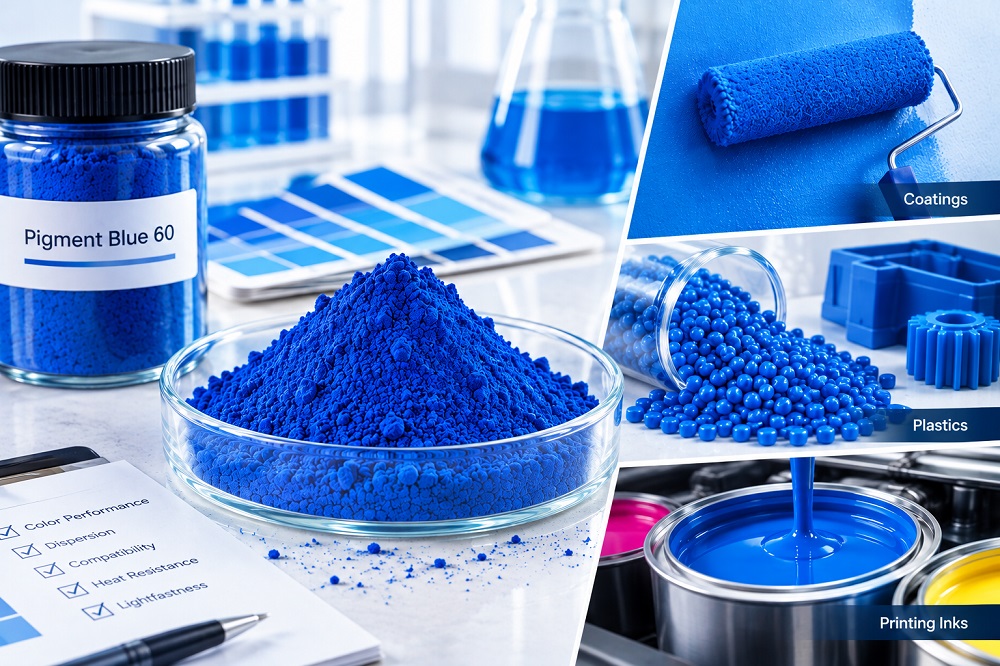
Pigment Blue 60 is an anthraquinone organic pigment that may be considered for industrial formulations requiring specific blue color characteristics. However, successful implementation depends on the properties of the commercial grade, the formulation in which it is used, and the performance standards of the finished product.
For international manufacturers and procurement teams, the challenge is to establish whether a proposed grade can meet technical requirements while remaining commercially viable over repeated production cycles. This guide examines practical considerations for pigment qualification, formulation development, quality management, and supplier cooperation.
Why Formulation Requirements Should Come Before Pigment Selection
A pigment should be selected according to the requirements of the finished product rather than its color designation alone. Two materials that appear similar may behave differently when incorporated into a particular binder, polymer, or processing system.
Before evaluating a new grade, manufacturers should define the target shade, required color strength, production conditions, durability expectations, and relevant regulatory requirements. Establishing these criteria early makes supplier discussions more productive and helps avoid unnecessary testing.
For buyers considering Pigment Blue 60, the objective is to identify a commercially available grade that satisfies the intended application instead of assuming that every product carrying the same pigment designation will deliver identical results.
Managing Color Matching During Product Development
Establish a Clear Color Reference
Color matching should begin with an approved physical sample or an agreed instrumental color specification. This provides a consistent reference for laboratory trials, supplier comparisons, and future production batches.
Manufacturers should document the substrate, formulation, pigment concentration, preparation method, and evaluation conditions used to establish the reference. These details help ensure that comparisons are meaningful and repeatable.
Evaluate Color Under Relevant Conditions
The appearance of a pigment can change depending on the surrounding formulation and the method used to prepare the finished material. Factors such as dispersion, film thickness, substrate color, and binder selection may influence the observed shade.
When evaluating a proposed grade, use conditions that closely represent the intended production process. Where appropriate, combine visual assessment with instrumental color measurement to identify differences that may not be obvious during an initial inspection.
Control Variation Between Production Batches
Manufacturers supplying repeat orders need a process for managing acceptable color variation. An approved reference sample, defined tolerances, and consistent testing procedures can help purchasing and quality teams assess incoming materials.
If a batch falls outside the agreed specification, investigate the deviation before adjusting the formulation. Changes in raw materials, equipment settings, additives, and processing conditions can all contribute to unexpected color differences.
Evaluating Pigment Compatibility in Industrial Formulations
Consider the Complete Formulation
Pigment performance depends on the interaction between the colorant and the other components in the formulation. A grade that performs adequately in one system may require additional evaluation when used with a different binder, polymer, solvent, or additive package.
For this reason, manufacturers should assess the pigment within the complete formulation rather than relying exclusively on isolated laboratory data.
Review Processing Requirements
Mixing equipment, dispersion methods, processing temperature, and production speed may influence the final result. The relevant variables differ according to the manufacturing process and the characteristics of the finished material.
Before introducing a new grade, establish suitable processing conditions and conduct controlled trials. Record the results so that any changes in appearance or processing behavior can be evaluated systematically.
Verify Performance Before Commercial Production
Laboratory testing can identify potential issues during early development, but larger production runs may introduce additional variables. A controlled production trial can help verify whether the material performs consistently under representative operating conditions.
For significant formulation changes, define the acceptance criteria before testing begins. This helps manufacturers make objective decisions about whether to approve, modify, or reject the proposed material.
How to Assess a Pigment Alternative Without Increasing Production Risk
Manufacturers sometimes investigate alternative pigments to improve availability, manage costs, or meet revised product specifications. However, replacing an established material requires more than identifying another pigment with a similar blue appearance.
Compare Technical Requirements First
List the essential properties of the existing material, including target shade, color strength, processing behavior, and any required durability characteristics. Use these criteria to screen possible alternatives.
Pigment Blue 60 belongs to the anthraquinone pigment family, but its suitability as a replacement for another blue pigment depends on the formulation and the properties of both materials. Similar color descriptions do not guarantee equivalent performance.
Run Side-by-Side Trials
Whenever possible, compare the existing pigment and the proposed alternative under the same formulation and processing conditions. This allows manufacturers to assess differences in color development, dispersion, and finished-product performance.
Record the pigment dosage, processing parameters, test results, and any formulation adjustments required. This information helps determine whether a change is technically acceptable and economically justified.
Calculate the Cost of Switching
A replacement material may have a different purchase price or require changes to the manufacturing process. Buyers should consider the total cost of implementation, including sample evaluation, production trials, formulation adjustments, quality testing, and potential downtime.
A lower unit price does not necessarily translate into lower overall costs. The preferred alternative should meet the required specifications while supporting stable and efficient production.
Quality Documentation for International Pigment Buyers
Request Product-Specific Technical Information
Before approving a supplier, request the technical data sheet and safety data sheet for the exact commercial grade being offered. Depending on the intended application, additional test reports or compliance documents may also be required.
Review whether the documented properties correspond to the manufacturer's actual product and whether the test methods are relevant to the intended use. Important purchasing specifications should be confirmed in writing rather than inferred from general marketing descriptions.
Agree on Quality Acceptance Criteria
A clear purchasing specification should define the characteristics that matter to the buyer. These may include appearance, color performance, packaging condition, identification, and other agreed technical requirements.
For repeat orders, document how incoming batches will be inspected and how deviations will be communicated and resolved. Clear expectations can reduce uncertainty for both the buyer and the supplier.
Maintain Traceability
Batch identification and retained samples can help manufacturers investigate quality issues and compare results across shipments. Maintaining records of approved specifications and incoming inspections also supports more consistent procurement decisions.
For businesses operating across multiple production sites, consistent documentation can make it easier to coordinate quality requirements between purchasing, technical, and manufacturing teams.
Choosing a Long-Term Pigment Blue 60 Supply Partner
A dependable supply relationship involves more than product availability. Manufacturers need a supplier that communicates clearly, provides appropriate documentation, and understands the commercial requirements of recurring industrial orders.
Evaluate Supply Reliability
Discuss minimum order quantities, packaging options, estimated lead times, order scheduling, and procedures for handling changes in demand. Buyers should also clarify the arrangements for shipping and the documents required for importation.
For regular production, predictable communication about order status and delivery schedules can help purchasing teams manage inventory more effectively.
Assess Technical Communication
Suppliers should be able to explain the available product specifications and provide relevant information for evaluating application suitability. Clear communication is especially important when a buyer is qualifying a new grade or investigating a production issue.
Providing the supplier with accurate information about the target application and required performance helps avoid unsuitable recommendations and unnecessary sample testing.
Look Beyond the Initial Quotation
When comparing suppliers, consider technical suitability, quality consistency, documentation, delivery performance, and the ability to support repeat purchases. These factors contribute to the overall value of a supply relationship.
For international procurement teams, a structured supplier evaluation process can improve purchasing transparency and reduce the risks associated with changing raw material sources.
Frequently Asked Questions
What should manufacturers confirm before using Pigment Blue 60?
Manufacturers should confirm the target shade, application suitability, formulation compatibility, processing requirements, and relevant durability specifications. The proposed grade should be tested under conditions representative of the intended production process.
Can Pigment Blue 60 replace another blue pigment?
It may be considered as an alternative in selected formulations, but suitability cannot be determined by color appearance alone. Side-by-side testing is necessary to compare color development, processing behavior, performance, and total formulation cost.
How can buyers reduce the risk of inconsistent pigment quality?
Use a written product specification, approve a reference sample, review relevant technical documentation, and establish clear acceptance criteria for incoming batches. Retaining inspection records can also help identify recurring issues.
What information should be included in a supplier inquiry?
Include the intended application, target shade, required performance characteristics, estimated purchasing quantity, packaging preferences, and destination market. These details help the supplier assess the request and provide relevant product information and commercial terms.
Discuss Your Pigment Blue 60 Requirements
Reliable pigment sourcing begins with a clear technical specification, practical formulation testing, and a supplier evaluation process that considers both product performance and commercial requirements.
If you are evaluating Pigment Blue 60 for an industrial formulation or considering a new pigment supply partner, contact our team to discuss your requirements. Share your application details, target specifications, and estimated order quantity to request available product information, sample arrangements, and a quotation.
We welcome inquiries from international manufacturers, distributors, and procurement teams seeking suitable pigment solutions for their production requirements.
Σχετικά προϊόντα
 How to Select Pigment Blue 60 for High-Performance Color Formulations
- Pigment Yellow 139: Properties, Applications, and Buying Guide for Industrial Buyers
- How to Choose the Right Pigment Yellow 97 for Plastics, Coatings, and Inks
- Pigment Red 177 Buying Guide: Everything Importers Need to Know Before Purchasing
- What Is Pigment Red 146 and Where Is It Used?
- Pigment Blue 60: Properties, Applications, and Buying Guide for Industrial Buyers
- Pigment Red 146: Properties, Applications, and Technical Guide
- Pigment Yellow 110: Properties, Applications, and Buying Guide for Industrial Manufacturers
- Why Global Buyers Prefer Pigment Red 177 for High-Performance Industrial Products
- Infrared Reflective Titanium Dioxide: Properties, Applications, and Buying Guide